Advancing Customer Protection Through Action Research
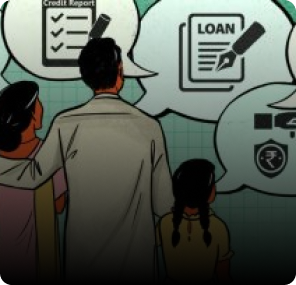
Dvara Research embarked on an exciting journey in 2021 by launching the Customer Protection Program under the Centre for Customer Protection. With a bold mission to tackle the shifting tides of financial customer protection in India, the Centre set out to research, test, and scale innovative solutions that pave the way for meaningful financial inclusion. Through an extensive portfolio of projects, Dvara Research has been examining how strong institutional practices in customer protection foster trust and confidence in formal finance, particularly digital channels, among low-income, rural, and women customers so that they may reach a state of being Āśvasta (Aa-sh-vas-ta) - a Sanskrit word meaning assured and anxiety-free - while using formal financial products and services. Under this program, Dvara Research initiated a broad array of action-research projects, covering multiple protection domains and product segments. These involved rigorous fieldwork and close collaboration with private and public sector partners. Several projects have produced invaluable customer protection toolkits, which are now being scaled alongside its partners.
Use the dots below to move to next page
195
Publications
08
Policymaker-accepted
regulatory recommendations
29
Collaborative
projects
225
Event
participations
13 States 33 Districts
Fieldwork
geographic coverage
The Action Research Process And Our Projects
Illustration of the Action Research Process as envisioned by Dvara Research. It aims to integrate our projects into the framework of an action research process, informed by our practical experience. By action, we mean doing rather than thinking. Accordingly, every phase of the process integrates purposeful activities to foster iterative learning and impact. The process is not strictly sequential; stages often require retracing steps or multiple iterations. Each stage may include sub-actions and not all stages apply universally to every project. Our various projects have been situated at different stages. Click on each stage to read more.
Stage 1
Talk to experts | Conduct scoping work/survey | Develop problem statement | Identify solution/intervention
Women and Savings
Digital money management tool for women entrepreneurs
Stage 2
Identify partners | Onboard partners | Develop intervention | Lay out field plan | Institutional Review Board
Consent for Digital Lending
Integrated GRM for Digital Lending
Financing Nano Enterprises
Stage 3
Perform intervention | Collect data (check for quality) | Monitor adherence to field protocols
Financial Health Survey (FHS)
Exclusion from Public Health Insurance (MAAY/CHIS)
Stage 4
Synthesize learnings | Build narrative around solution | Build a toolkit (if applicable)
Voice of Aggrieved Customer
Digitizing Women's Money Management
Debt Distress Protocols
Trust Project
Stage 5
Identify actors | Socialise findings/toolkits | Build consensus around narrative
Improving CICO networks
Responsible and Trustworthy Al
UPI Complaints Monitoring
Stage 6
Implementing solutions in a live environment and/or policy and practice changes that have an impact on users
Monitoring Customer Protection in Microfinance
Frauds Reporting & Management Platform
Exit
Tracking reduction in scale and severity of consumer harms | Periodic engagement with stakeholders
Harms and Risks of BNPL
Frauds Awareness Programs Evaluation
UPI In-App GRMs
Life Insurance Disclosure Format
Improving uptake of PMJJBY
Projects In Focus
Showcasing our flagship research initiatives that are shaping our current strategic priorities
Digital Women’s Money Management (DWMM)
The project examined day-to-day money management practices among women from low-income, socially embedded households and their amenability to digitisation. It starts from the premise that such households face persistent uncertainty due to irregular incomes, unexpected expenditure shocks, and illiquid assets. As women typically manage household finances, they respond to these uncertainties through intuitive, experience-based practices rather than explicit analysis. Their approach resolves into three distinct strategies: accessing liquidity through social and business networks (liquidity farming), adjusting the timing and amount of income (income shaping), and earmarking money across a hierarchy…

The project examined day-to-day money management practices among women from low-income, socially embedded households and their amenability to digitisation. It starts from the premise that such households face persistent uncertainty due to irregular incomes, unexpected expenditure shocks, and illiquid assets. As women typically manage household finances, they respond to these uncertainties through intuitive, experience-based practices rather than explicit analysis. Their approach resolves into three distinct strategies: accessing liquidity through social and business networks (liquidity farming), adjusting the timing and amount of income (income shaping), and earmarking money across a hierarchy of goals (animating money). While historically embedded in social contexts, these practices are increasingly interacting with digital financial systems.
Against this backdrop, the project assessed whether existing digital financial services align with households’ financial realities. Participants were offered the option to digitise payments via UPI using an ambassador model, where women from the community were trained to support others in transitioning to digital payments. The study tracked all transactions both UPI and others, the reasoning behind them, and participants’ financial planning and goals. Data was collected fortnightly over 6 months from 299 participants.
Preliminary analysis indicates that the ambassador model has substantial scope for increasing the adoption of digital payments, even after the assistance period. The analysis also shows that several money management practices are primarily used to deepen social relationships, which help cope with contingencies. Further, we also find that digitisation enables new transaction patterns, such as payments to siblings, which were conspicuously absent in non-digital modes. By systematically documenting these practices, the study seeks to inform the design of financial products better aligned to the decision-making processes.
Responsible and Trustworthy Artificial Intelligence
This project, undertaken jointly by Dvara Research, PwC India and Fintech Association for Consumer Empowerment, aims to assist digital lenders in India to deploy AI responsibly by translating high-level academic principles of Responsible and Trustworthy AI (RTAI) into a practical, industry-ready self-assessment checklist. In response to the industry’s uncertainty around responsible AI adoption, we sought to equip stakeholders in the digital lending ecosystem with a suite of best practices that can guide the responsible integration of AI into their operations as well as an easy-to-use checklist to assess their alignment…
This project, undertaken jointly by Dvara Research, PwC India and Fintech Association for Consumer Empowerment, aims to assist digital lenders in India to deploy AI responsibly by translating high-level academic principles of Responsible and Trustworthy AI (RTAI) into a practical, industry-ready self-assessment checklist. In response to the industry’s uncertainty around responsible AI adoption, we sought to equip stakeholders in the digital lending ecosystem with a suite of best practices that can guide the responsible integration of AI into their operations as well as an easy-to-use checklist to assess their alignment with widely accepted Responsible AI standards.
We developed an RTAI framework that articulates six core principles and defines their practical contours, accompanied by a checklist grounded in actionable and globally recognised best practices that cover the entire AI lifecycle. These practices are presented as questions in a web-based checklist format, aimed at the technology teams of digital lenders. In answering these questions, FSPs reflect on the presence and maturity of relevant AI safeguards. Based on their answers, the checklist tool scores their existing practices, highlights areas that require urgent attention and benchmarks them against industry standards.
The work has gained further relevance as the RBI’s FREE AI Committee has impressed upon Fintech Self-Regulatory Organisations the need to create toolkits that facilitate the adoption of responsible and trustworthy AI among fintechs and develop industry standards that individual FSPs can use to validate the maturity of their AI-related safeguards.
UPI In-App GRMs
While UPI has become the predominant payment modality for most users, evidence indicates that users (especially constrained users) do not always engage with grievance mechanisms (GRMs) when required. Through field testing of the grievance functionalities of predominant UPI applications, we found that their effectiveness for the constrained user who we describe as having low literacy and low digital proficiency is limited. Users have poor comprehension of the in-app GRMs of UPI apps, leading to anxiety around use of the app and fear that they may lose money. Against this backdrop,…
While UPI has become the predominant payment modality for most users, evidence indicates that users (especially constrained users) do not always engage with grievance mechanisms (GRMs) when required. Through field testing of the grievance functionalities of predominant UPI applications, we found that their effectiveness for the constrained user who we describe as having low literacy and low digital proficiency is limited. Users have poor comprehension of the in-app GRMs of UPI apps, leading to anxiety around use of the app and fear that they may lose money. Against this backdrop, this project sought to improve the useability and accessibility of GRMs in UPI applications for constrained users, thereby improving their quality of engagement with UPI and digital finance in general.
Working in collaboration with independent UX research and interaction design experts, we sought to identify and resolve the key pain points of accessibility and useability that hamper constrained users’ experience of UPI. A key component of this exercise was the creation of a UPI GRM framework which offers a structure to rethink existing grievance redressal mechanisms for UPI and its service providers. The framework, with four consumer values and corresponding product principles, proposes consistency in the structure of in-app GRMs across UPI applications. Accordingly, we redesigned in-app GRMs in UPI, keeping in mind the need for relevant user engagement.
These design suggestions were synthesised into a design toolkit, intended for product managers and UX researchers to enhance user satisfaction for aggrieved users, streamline issue resolution processes, and elevate the overall user experience of UPI applications. The project has gained relevance among product managers and UI/UX designers intending to design for constrained user groups, and among policy stakeholders who see value in building consistency in the structure of GRMs across the UPI ecosystem.
Digital Payment Infrastructure In Digital Payments: A Comprehensive Fraud Reporting and Management System
This project presents a blueprint for creating a digital payment infrastructure (DPI) that could reduce the occurrence of fraud in digital payments and enhance customer trust. UPI-related scams may involve accessing sensitive user information, tricking users into making P2P transactions over Unified Payments Interface (UPI) apps/other digital platforms, or the exploitation of other system vulnerabilities to target user funds. Many scams are a result of authorised but unintended transactions where users, knowingly or unknowingly, authorise transactions to unintended parties due to deceit, manipulation, or system vulnerabilities. UPI scams are a…
This project presents a blueprint for creating a digital payment infrastructure (DPI) that could reduce the occurrence of fraud in digital payments and enhance customer trust. UPI-related scams may involve accessing sensitive user information, tricking users into making P2P transactions over Unified Payments Interface (UPI) apps/other digital platforms, or the exploitation of other system vulnerabilities to target user funds. Many scams are a result of authorised but unintended transactions where users, knowingly or unknowingly, authorise transactions to unintended parties due to deceit, manipulation, or system vulnerabilities. UPI scams are a result of ever-changing modus operandi that law enforcement agencies, banks, third-party app providers and online marketplaces have to deal with.
The project presents a set of solutions for the ecosystem of actors to consider in tackling and curbing the illegitimate activity of scamsters and other fraudulent actors over the very popular UPI of India. We uncover specific vulnerabilities at both product and system levels and recommend a multifaceted approach to mitigate risks, including user education, regulatory interventions, and technological innovations to safeguard users against scams.
The key proposal is to establish a DPI, a Comprehensive Fraud Reporting and Management System to facilitate efficient fraud reporting, investigation, and management (thought of as a stylised case for UPI alone but can be extended to encompass other payments systems as well). The proposed system optimises for three-level opportunities:
- Back-end coordination between all UPI-related scam reporting channels available to customers
- Identifying and collecting common data points as part of the Minimum Viable Information (MVI) by all scam reporting channels, which can then be used for verification of incoming complaints
- Providing visibility of the MVI collected by different channels to all other reporting channels and using these for intelligence creation and triggering of proportionate enforcement actions to mitigate UPI-related scams.
This project aims to catalyse a dialogue among policymakers, industry stakeholders, and the public to strengthen the UPI ecosystem against the evolving threat of retail financial scams. We hope that actions taken in this regard will set a new standard for protecting Indian citizens engaging in authentic transactions and find replication across countries that desire low-cost and secure digital payments at scale for their citizens.
How can the service delivery of public insurance schemes – PMJJBY and PMSBY be improved?
This project seeks to optimise the service delivery of the two insurance schemes launched under the Jan-Dhan Se Jan Suraksha program, i.e., the Pradhan Mantri Jeevan Jyoti Bima Yojana (PMJJBY) and Pradhan Mantri Suraksha Bima Yojana (PMSBY). These schemes are lauded for their affordability and accessibility, and have made formal insurance a reality for millions of low-income households. Yet, in the last few years, customer protection issues have surfaced in the delivery of these schemes. Media investigations and reports have revealed several instances of banks charging customers’ accounts for the…
This project seeks to optimise the service delivery of the two insurance schemes launched under the Jan-Dhan Se Jan Suraksha program, i.e., the Pradhan Mantri Jeevan Jyoti Bima Yojana (PMJJBY) and Pradhan Mantri Suraksha Bima Yojana (PMSBY). These schemes are lauded for their affordability and accessibility, and have made formal insurance a reality for millions of low-income households. Yet, in the last few years, customer protection issues have surfaced in the delivery of these schemes. Media investigations and reports have revealed several instances of banks charging customers’ accounts for the two insurance schemes without their consent. Various structural issues on the supply side are also a significant part of the problem that discourages providers from adequately servicing customers of these two insurance schemes. Addressing issues in their structural design and architecture is crucial to their success and to curb customer protection concerns.
The project culminated in a policy brief that lays out policy recommendations across four broad themes- structural design, process efficiency, market monitoring, and awareness and accessibility. To address gaps in customer service, we also proposed a diagnostic toolkit to assess on-ground performance of the two schemes from a customer centric perspective.
The project is widely relevant to financial inclusion policy, demonstrable through the fact that NITI Aayog has now commissioned a study via Microsave Consulting, which has applied the diagnostic toolkit to identify gaps in scheme delivery in 50 aspirational districts.
Cash-in Cash-out (CICO)
Business correspondent (BC) agents are the crucial last-mile infrastructure supporting India’s vision for efficient, population-scale delivery of financial and other government services using Digital Public Infrastructure (DPI). They bridge the gap between a digitized and futuristic vision of India, where services are instantaneously delivered digitally; and an India which is still cash-reliant and prefers face-to-face interaction. This project examines why many customers still face difficulties accessing reliable CICO services at the last mile, despite widespread penetration of BC networks. The study began with a mapping of India’s BC network business…
Business correspondent (BC) agents are the crucial last-mile infrastructure supporting India’s vision for efficient, population-scale delivery of financial and other government services using Digital Public Infrastructure (DPI). They bridge the gap between a digitized and futuristic vision of India, where services are instantaneously delivered digitally; and an India which is still cash-reliant and prefers face-to-face interaction. This project examines why many customers still face difficulties accessing reliable CICO services at the last mile, despite widespread penetration of BC networks.
The study began with a mapping of India’s BC network business to identify the levers available to policymakers, banks, or corporate BCs to support agents in offering uninterrupted CICO services to their customers. A theoretical model for BC agent networks based on literature reviews and conversations with experts was constructed, and recursively refined with inputs from a primary study in the form of field interactions with 26 BC agents across 3 states. The methodology permitted a focus on the agent's actual experience and the environment they function in daily, providing valuable insight into the daily operations of BC agents, their perspectives, and actions. Through a thematic analysis of interview transcripts, we arrived at a four-layered model for agent ‘success’. Our definition of agent success encapsulates their ability to facilitate access to uninterrupted CICO services for their customers.
The project proposes high-impact solutions to help agents deliver uninterrupted CICO services, which are also relevant to policymakers to support the evolution of a robust CICO ecosystem.
Other Projects
Highlighting emerging research efforts that complement our core work
Consent artefact for constrained users in digital lending
Consent is a critical part of communication between users and providers of Digital Financial Services (DFS). However, the consent and notice model for DFS has many deficiencies, especially for constrained users, i.e., users with limited literacy and first-time smartphone users. This project sets out specific recommendations on how providers such as Account Aggregators can make consent customer friendly. These recommendations emerge from a qualitative primary study which examines why customers currently do not engage meaningfully with consent artefacts and how a behaviourally informed design could improve understanding and engagement We…
Consent is a critical part of communication between users and providers of Digital Financial Services (DFS). However, the consent and notice model for DFS has many deficiencies, especially for constrained users, i.e., users with limited literacy and first-time smartphone users. This project sets out specific recommendations on how providers such as Account Aggregators can make consent customer friendly. These recommendations emerge from a qualitative primary study which examines why customers currently do not engage meaningfully with consent artefacts and how a behaviourally informed design could improve understanding and engagement
We find that among low-income borrowers, the borrowing journey is shaped by financial stress, time pressure and fear of being denied formal credit, which in turn influences consent decisions. This macro-context shapes individuals’ micro-decision of consent. Furthermore, the shrink-wrap design of consent artefacts offers little scope for negotiation or challenge, affording customers little real choice, leading customers to passively comply.
These findings have been translated into actionable recommendations for redesigning consent artefacts to ease the customer’s loan application journey. They aim to make the journey easier and empower customers by acquainting them with the concepts of consent, personal data, explaining to them the role of their persona data in the lenders' decision, reducing the barriers to engagement by using local languages, visual cues live chats and finally offering an accessible redress and enquiry mechanism. The recommendations are available here, the findings from the behavioural study are available here, and the first principles research on the need for informed consent in financial services is available here.
Are awareness campaigns effective in reducing UPI fraud?
Social engineering ploys, where customers are manipulated into authorising fraudulent transactions, are a serious customer protection concern. Regulators and financial institutions have responded with awareness campaigns, like TV commercials (TVCs), to raise awareness and reduce customers’ tendency to engage with fraudsters. This project deploys an outcome-based survey (OBS) BS to evaluate the effectiveness of UPI-fraud-awareness campaigns in reducing individuals’ propensity to engage with fraudulent communication. Leaning on behavioural science and market research literature, this OBS measures campaign effectiveness along 4 dimensions: recall, appeal, comprehension, and impact. To recreate the hot state that…
Social engineering ploys, where customers are manipulated into authorising fraudulent transactions, are a serious customer protection concern. Regulators and financial institutions have responded with awareness campaigns, like TV commercials (TVCs), to raise awareness and reduce customers’ tendency to engage with fraudsters. This project deploys an outcome-based survey (OBS) BS to evaluate the effectiveness of UPI-fraud-awareness campaigns in reducing individuals’ propensity to engage with fraudulent communication.
Leaning on behavioural science and market research literature, this OBS measures campaign effectiveness along 4 dimensions: recall, appeal, comprehension, and impact. To recreate the hot state that individuals encounter when faced with fraudulent messages, the OBS simulates common frauds in a lab-in-the-field setting and supplemented with focused group discussions. As proof of concept, this OBS was piloted with 80 low-income and new-to-UPI users from four Tier I and Tier II cities to test the effectiveness of three TVCs.
We discovered that TVCs with relatable characters and simple messages in a storytelling format fare better on recall, appeal, and comprehension. However, awareness campaigns primarily influence cognition and are limited in their ability to shift attitudes or behaviour, which are shaped by habits, emotions and vulnerability to biases. This is the reason that fraudsters continue to use ‘hot state’ scenarios to make customers feel panicked or elated so that they do not think clearly. These findings reiterate the importance of designing awareness campaigns that remind customers that nothing is ever as urgent as some unknown caller seems to claim.
The Making of Trust
This project studies how borrowers place trust in digital lenders in the rapidly expanding digital credit ecosystem in India. In 2021, India had nearly 1,100 unique loan apps across various platforms. However, more than half of these were found to be illegal - they operated without proper licensing, promised quick loans without paperwork at questionable terms such as exorbitant interest rates, hidden fees, and used unethical, coercive recovery methods. These practices are in stark contrast with the customer protection guidance prescribed by the regulator to regulated lenders. The project enquires…
This project studies how borrowers place trust in digital lenders in the rapidly expanding digital credit ecosystem in India. In 2021, India had nearly 1,100 unique loan apps across various platforms. However, more than half of these were found to be illegal - they operated without proper licensing, promised quick loans without paperwork at questionable terms such as exorbitant interest rates, hidden fees, and used unethical, coercive recovery methods. These practices are in stark contrast with the customer protection guidance prescribed by the regulator to regulated lenders.
The project enquires into two questions: what are the expectations that prospective borrowers have of trustworthy lenders and, how borrowers gauge the trustworthiness of a lender. We design a primary study to understand how customers trust and contract with a digital lender. Our study of trust relies on exploring the proximate grounds that people rely on to trust someone or something. We commenced a mixed-methods study of digital financial services’ users in early 2024. The study is supported by qualitative interviews spanning a range of topics from what trust meant in personal relations and financial transactions to the obligations that come with being considered trustworthy. This is complemented by an experiment where respondents assess the user interfaces of digital lending apps for trustworthiness.
Based on our discussions with users, we develop a theory to explain the making of trust in digital lending. A short video summarising the findings is available here; the foundational research on the psychological and affective dimensions of trust is available here and here.
Monitoring Customer Protection in Microfinance
This project developed a survey-based monitoring tool to enable self-regulatory organisations (SROs) to monitor the activities of microfinance institutions (MFIs), with a particular focus on risks to customers. The project was initiated in the context of significant regulatory changes that resulted in major revisions to how MFIs underwrite. The impact of these regulations on borrowers, therefore, remained to be understood. A systematic tool was thus needed to capture their impact, both as a point-in-time exercise and through continuous assessment. The tool was piloted with six members of Sa-Dhan, one of…
This project developed a survey-based monitoring tool to enable self-regulatory organisations (SROs) to monitor the activities of microfinance institutions (MFIs), with a particular focus on risks to customers. The project was initiated in the context of significant regulatory changes that resulted in major revisions to how MFIs underwrite. The impact of these regulations on borrowers, therefore, remained to be understood. A systematic tool was thus needed to capture their impact, both as a point-in-time exercise and through continuous assessment. The tool was piloted with six members of Sa-Dhan, one of the two SROs for microfinance institutions. Given the efficacy of the tool, Sa-Dhan subsequently scaled it to six additional members.
UPI Market Monitoring
The project developed a market monitoring tool for Unified Payments Interface (UPI) providers that leverages publicly available social media and application review data to surface, in near real time, the hurdles customers face. While UPI has rapidly become India’s dominant payment infrastructure, traditional complaint channels capture only a small fraction of user experiences, even though users frequently encounter onboarding challenges, failed transactions, and delays in grievance resolution. To address this visibility gap, data was collected from Twitter and the Google Play Store for major UPI providers that together account for…
The project developed a market monitoring tool for Unified Payments Interface (UPI) providers that leverages publicly available social media and application review data to surface, in near real time, the hurdles customers face. While UPI has rapidly become India’s dominant payment infrastructure, traditional complaint channels capture only a small fraction of user experiences, even though users frequently encounter onboarding challenges, failed transactions, and delays in grievance resolution.
To address this visibility gap, data was collected from Twitter and the Google Play Store for major UPI providers that together account for over 90 percent of transaction volumes. The data were modelled using natural language processing methods to identify an exhaustive set of customer hurdles, calculate their prevalence rates, and generate indicators of provider responsiveness and temporal trends. The tool, Dvara PARSE, is currently running, and it captures grievances daily and categorises them into themes like onboarding hurdles, inadequate grievance redress, unauthorised charges, etc. Further, the tool identifies overlaps across these grievance categories and quantifies patterns of customer sentiment and periodic traffic related to providers. The overall accuracy of the tool stands at 94 percent.
By automating the identification and measurement of customer-facing issues, the monitoring tool yields actionable insights for providers and regulators, enhancing the detection of emerging problems in the UPI ecosystem.
Debt Distress
The project developed a machine–learning–based debt distress detection tool for microfinance borrowers that makes distress visible and measurable using administrative data already held by lenders. In current practice, lenders observe only repayment outcomes (delinquencies), even though distress often sets in much earlier, with borrowers adopting different repayment strategies and coping mechanisms, such as cutting essential consumption, withdrawing children from school, or foregoing medical care, to continue repaying. To address this blind spot, we trained and field-tested the model on data from over 250,000 borrowers in partnership with the Robert Bosch…
The project developed a machine–learning–based debt distress detection tool for microfinance borrowers that makes distress visible and measurable using administrative data already held by lenders. In current practice, lenders observe only repayment outcomes (delinquencies), even though distress often sets in much earlier, with borrowers adopting different repayment strategies and coping mechanisms, such as cutting essential consumption, withdrawing children from school, or foregoing medical care, to continue repaying.
To address this blind spot, we trained and field-tested the model on data from over 250,000 borrowers in partnership with the Robert Bosch Centre for Data Science and AI at IIT Madras and a leading NBFC. We were able to analyse loan characteristics, repayment behaviour, and account-level patterns. The model identifies latent distress and the future probability of delinquency, enabling lenders to detect potential borrower harm early. Field validation showed delinquency prediction accuracy exceeding 95 percent. Distress prediction accuracy of approximately 75 percent also represents a significant advance over prevailing practices where distress remains entirely unmeasured.
As a next step, the detection tool will feed into a broader set of Debt Distress Protocols aimed at testing and institutionalising post-detection interventions, shifting the system from passive observation of harm to structured, evidence-based response strategies.
Harms and risks in BNPL
The project undertook a systematic assessment of the monetary and non-monetary costs faced by Indian consumers using Buy Now, Pay Later (BNPL) products, a category of short-term digital credit that had grown rapidly without commensurate regulatory oversight. The research methodology involved the usage of several BNPL products to reviews their terms and conditions, analyse product features, examine fee structures and implicit interest rates. Legal experts were also consulted to gauge applications’ compliance with existing consumer protection and credit regulations. This work culminated in the analytical report, “The Costs of Using…
The project undertook a systematic assessment of the monetary and non-monetary costs faced by Indian consumers using Buy Now, Pay Later (BNPL) products, a category of short-term digital credit that had grown rapidly without commensurate regulatory oversight.
The research methodology involved the usage of several BNPL products to reviews their terms and conditions, analyse product features, examine fee structures and implicit interest rates. Legal experts were also consulted to gauge applications’ compliance with existing consumer protection and credit regulations. This work culminated in the analytical report, “The Costs of Using Buy Now, Pay Later (BNPL) Products”. The report documented the true costs associated with BNPL credit, identified gaps in transparency and disclosure, highlighted risks arising from the then business models and weak grievance redress systems. It also offered recommendations for reform, including treating BNPL as regulated credit, mandating clear cost disclosures through Key Fact Statements, strengthening credit reporting, and establishing stronger consumer protection protocols.
Following dissemination, these findings were subsequently reflected in regulatory developments led by the Reserve Bank of India. After the publication of the report, the RBI’s Digital Lending Guidelines (2022, refined through FAQs and updated Directions in 2025) incorporated several of the report’s recommendations: BNPL was formally brought within the ambit of regulated credit when extended through banks and NBFCs; lenders were required to provide transparent, standardised disclosure of all fees; BNPL credit flows were mandated to be reported to credit bureaus; grievance redress and collections were strengthened; and the use of unregulated intermediaries for credit disbursal and repayment was curtailed.
Integrated Grievance Redress Mechanism (GRM) for Digital Lending
The project was initiated with the objective of developing an integrated GRM for digital lenders, in partnership with an industry association. It was premised on the fact that digital lenders often serve as intermediaries and, therefore, many grievances are not necessarily directly addressable by them. Further, due to the varied scale of operations across digital lenders, maintaining an omnichannel GRM is often difficult for smaller entities. Accordingly, the project set out to create a blueprint for a responsive omnichannel GRM that could be housed at the industry association, with necessary…
The project was initiated with the objective of developing an integrated GRM for digital lenders, in partnership with an industry association. It was premised on the fact that digital lenders often serve as intermediaries and, therefore, many grievances are not necessarily directly addressable by them. Further, due to the varied scale of operations across digital lenders, maintaining an omnichannel GRM is often difficult for smaller entities. Accordingly, the project set out to create a blueprint for a responsive omnichannel GRM that could be housed at the industry association, with necessary integration with other implicated actors, primarily banks and NBFCs. The outputs from the project, however, did not materialise, as the partnership fell apart due to developments in the industry.
Can information disclosures help customers make better life insurance purchase decisions?
Information asymmetry is a situation where one party to a transaction has more or better information than the other. In financial markets, it is often the case that the provider has more information than the poor customer about a product but does not disclose this information accurately in order to make an unsuitable sale. Life insurance is a good use-case to study in this regard. If poor customers buy life insurance at all, they usually buy endowment plans, but these are not typically suitable for them. This project proposed to…
Information asymmetry is a situation where one party to a transaction has more or better information than the other. In financial markets, it is often the case that the provider has more information than the poor customer about a product but does not disclose this information accurately in order to make an unsuitable sale. Life insurance is a good use-case to study in this regard. If poor customers buy life insurance at all, they usually buy endowment plans, but these are not typically suitable for them.
This project proposed to solve this problem by focusing on the disclosure aspect. Accordingly, we employed behavioural science to first understand the drivers of life insurance purchases among low-income households, and then experimental methods to test the effectiveness of diverse disclosure formats in influencing the purchase decision. We discovered that disclosures that merely provide accurate information about endowment plans are not enough to change habits. Rather, a superior alternative option should also be offered, and accurate information about its advantages over endowment plans needs to be clearly presented. Then switching behaviour follows.
Our recommendations based on this study call for simple, easy-to-understand disclosures that aid product comparison and comprehension. Specifically, our recommendations called for the introduction of a simplified Customer Information Sheet (CIS) with features explained in simple language, provision of an illustration on customized benefits and compulsory signing of both. The project has gained broader relevance, as the IRDAI has now implemented all of these recommendations and provided an illustrative CIS for insurance companies.
Can digital tools help women nano entrepreneurs manage their cashflows effectively, and improve their adoption of digital financial services?
Women nano entrepreneurs lead complex financial lives, managing both business finances and handling money matters at home. The complexity arises from the fact that financial decision-making is largely intuitive, undocumented, and frequent. Due to the informal nature of their enterprises, they typically lack access to tools that support effective money management. In a world where women from low-income families are inundated with one-size-fits-all financial products, we ask: What if women nano entrepreneurs could manage their daily money lives with the same ease as they send a WhatsApp message? Could a…

Women nano entrepreneurs lead complex financial lives, managing both business finances and handling money matters at home. The complexity arises from the fact that financial decision-making is largely intuitive, undocumented, and frequent. Due to the informal nature of their enterprises, they typically lack access to tools that support effective money management. In a world where women from low-income families are inundated with one-size-fits-all financial products, we ask: What if women nano entrepreneurs could manage their daily money lives with the same ease as they send a WhatsApp message? Could a digital money management tool make this possible? And who among the entrepreneurs would find such a tool most relevant and why?
We are exploring innovations in this space, in collaboration with MeraBills, a Technology Service Provider that offers book-keeping services and generates business intelligence for its users, typically small informal businesses. We believe that digital tools, such as the ones offered by MeraBills, can meaningfully advance women's financial inclusion by helping them save better, access suitable credit, and gain confidence in using digital financial services. Tools that women can adapt to their own needs and context can prove to be a useful way for women to manage their financial responsibilities, both at home and work.
Studying Exclusion in State-Sponsored Health Insurance: The Case of Mukhyamantri Ayushman Aarogya Yojana
To improve access to healthcare, most states in India offer health insurance schemes with fully or partially discounted premiums, primarily targeting low-income households. One such scheme is the Mukhyamantri Ayushman Arogya Yojana (MAAY), launched by the government of Rajasthan in 2021 which aimed to provide cashless, affordable healthcare to all families in the state. Yet early evidence shows that many people still struggle to benefit from the scheme. The project examines why these exclusions persist, despite MAAY’s promise of universal access. Using a citizen-centric framework, we examine exclusion at five…
To improve access to healthcare, most states in India offer health insurance schemes with fully or partially discounted premiums, primarily targeting low-income households. One such scheme is the Mukhyamantri Ayushman Arogya Yojana (MAAY), launched by the government of Rajasthan in 2021 which aimed to provide cashless, affordable healthcare to all families in the state. Yet early evidence shows that many people still struggle to benefit from the scheme. The project examines why these exclusions persist, despite MAAY’s promise of universal access.
Using a citizen-centric framework, we examine exclusion at five critical stages: becoming aware of the scheme, enrolling successfully, using benefits at hospitals, raising grievances, and renewing membership. Breakdowns at any of these touchpoints, such as lack of information, documentation mismatches, denial of care, technical issues, or inaccessible grievance channels can leave families without timely treatment. These obstacles prevent citizens from obtaining timely treatment and undermine the scheme’s core objective of protecting households from health-related financial shocks.
Building on our earlier work on exclusion in social protection, this project explores how broader economic, social and political exclusions shape people’s ability to access health insurance. Economic constraints, weak social networks, and limited political voice can interact to heighten vulnerability and reduce a citizen’s ability to navigate the system. By documenting these mechanisms of exclusion, the project aims to inform policymakers and support the design of more inclusive health insurance systems that ensure every individual can obtain care when they need it without friction.
Financial Health Survey
The concept of financial health is rapidly emerging as a crucial metric for financial inclusion. Over the last few years, there has emerged a call to look beyond the straightforward and easily measured access and usage metrics of financial products to gauge their impact on users’ lives as measured by their financial health or resilience. To measure the financial health of low-income households, this survey tool applies an input–output–outcome framework which can identify gaps that remain unaddressed by existing financial products. In partnership with PricewaterhouseCoopers, we have deployed the tool…

The concept of financial health is rapidly emerging as a crucial metric for financial inclusion. Over the last few years, there has emerged a call to look beyond the straightforward and easily measured access and usage metrics of financial products to gauge their impact on users’ lives as measured by their financial health or resilience. To measure the financial health of low-income households, this survey tool applies an input–output–outcome framework which can identify gaps that remain unaddressed by existing financial products.
In partnership with PricewaterhouseCoopers, we have deployed the tool across a sample of 4,000 low-income households in seven Indian states. The 20-minute survey captures ownership of a broad suite of financial products (inputs), along with the frequency and depth of their usage (outputs). It also provides a product-agnostic measure of household financial health (outcomes), defined here as the ability of low-income households to manage cashflows effectively and withstand contingencies. This framework enables the identification of gaps in both access and usage across financial product categories, differences in uptake and engagement across demographic and livelihood cohorts, and aspects of financial resilience that remain underserved by formal financial services.
The survey’s insights can be applied by multiple stakeholders: (i) financial service providers can use it for market reconnaissance and opportunity discovery, (ii) regulators can use it to monitor the effectiveness and impact of financial inclusion efforts, and (iii) implementation agencies can use it as a targeted needs-assessment tool.
Women & Savings
The project was conceived with the recognition that women from low-income households are offered meaningful opportunities to add liabilities to their portfolios through well-serviced microloans, while comparable asset-building products, such as savings instruments, are not similarly designed or delivered. In the first stage of the project, a conceptual understanding of the various savings products tested on this cohort was built. Fieldwork was then undertaken to capture women’s perspectives on savings and day-to-day money management. Suggestions and feedback were subsequently sought from a range of stakeholders, including Small Finance Banks, Banking…
The project was conceived with the recognition that women from low-income households are offered meaningful opportunities to add liabilities to their portfolios through well-serviced microloans, while comparable asset-building products, such as savings instruments, are not similarly designed or delivered.
In the first stage of the project, a conceptual understanding of the various savings products tested on this cohort was built. Fieldwork was then undertaken to capture women’s perspectives on savings and day-to-day money management. Suggestions and feedback were subsequently sought from a range of stakeholders, including Small Finance Banks, Banking Correspondents, and Chit Fund companies, so that supply-side constraints and motivations could be mapped. In the second stage, insights from these streams of work were synthesised, and core challenges affecting savings behaviour among women from low-income households were identified. Based on these insights, a novel savings product was conceptualised.
This product was envisaged not only as a mechanism for accumulating savings but also as a practical tool for managing household cash flows in ways that align with women’s financial realities.
Voice of Aggrieved Customers (VOAC)
This project was conceived with the goal of revealing customer protection issues that may be going unreported and to collect better insights into underlying problems faced by customers in the Banking, Financial Services and Insurance sector. Seven grassroot level organizations were recruited to surface and harvest over 100 lived experiences of constrained Digital Financial Services’ customers. The customer stories capture the customer’s experience at each touchpoint of their customer journey - from onboarding to the point of grievance or exit - and document the process as well as their personal…
This project was conceived with the goal of revealing customer protection issues that may be going unreported and to collect better insights into underlying problems faced by customers in the Banking, Financial Services and Insurance sector. Seven grassroot level organizations were recruited to surface and harvest over 100 lived experiences of constrained Digital Financial Services’ customers. The customer stories capture the customer’s experience at each touchpoint of their customer journey - from onboarding to the point of grievance or exit - and document the process as well as their personal reflections and emotions.
Our findings from this project revealed typical low-income, constrained customers’ pain points. It also shed light on the respondents’ inhibitions at each stage of their customer journey, their constraints that go beyond literacy and digital familiarity, their expectations from the service provider, which were markedly different from the parameters which are checked for in customer satisfaction surveys.
The aggregate data from this exercise as well as the literature on service and its associated constructs point to gaps in service quality measurement, that warrant further investigation, specifically, the lack of consensus on what constitutes minimal service standards or adequate service quality. To conclude, we have developed a framework and tool that is meant to complement the existing set of service quality tools and metrics by assessing service quality adequacy from a constrained customer’s point of view.
Get In Touch
Have questions about our work in financial customer protection? We invite your inquiries.
Subscribe to our Quarterly Newsletter
Stay updated on our publications, ideas and observations. Sign up here

Knowledge Repository
Our writings on foundational thinking in the domains of financial inclusion and social protection
Latest from Dvara Research
- Dvara Research
- 12/01/2026
- Dvara Research
- 24/12/2025
- Dvara Research
- 31/10/2025
- Dvara Research
- 21/10/2025
Your Reference Library
Sign in or sign up to access and manage your library
How To Create Your Library
How to save an article, author, or policy initiative of your choice:
- You’ll find this
icon in the top right corner of every article, author page, and policy initiative. - Simply click on the icon and that page will be saved in your reference library.
How to save text/quote:
- Drag and select any sentence or part of the article you want to save.
- A floating menu with a bookmark icon will be displayed next to the selected text.
- Click on
this icon to save the text in your reference library.
Here is how you can access your saved reading material:
- Click on the ‘Your Reference Library’ button in the top-right corner of the page, in the navigation bar.
- Everything you have saved will be listed here categorically.
- To remove a saved reference, click on
present next to every item on your list.

Researcher In Focus

Manvi Khanna
Research Associate
21/10/25
17/07/25
About Dvara Research
Dvara Research is an independent, non-partisan, not-for-profit policy research institution based in India. Its mission is to ensure that every low-income household and every small enterprise has complete access to suitable financial services and social security through a range of channels that enable them to use these services securely and confidently.
Since 2008, Dvara Research has deeply analysed, and carefully written about, financial inclusion and social protection in India from policy, regulatory, and practitioner perspectives that are anchored to its mission.
Its work has gained the admiration and respect of policymakers and regulators, and since its inception, Dvara Research has been a research-partner of choice for such key policy-making bodies as the Reserve Bank of India, Securities and Exchange Board of India, Pension Fund Regulatory and Development Authority etc.
We collaborate with:


SUBSCRIBE TO INPRO - OUR QUARTERLY DISPATCH
Perspectives on Inclusion and Protection